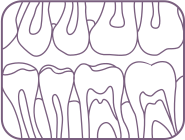
What is a Ceramic Restoration?

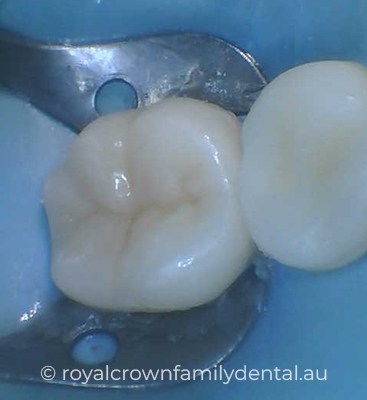
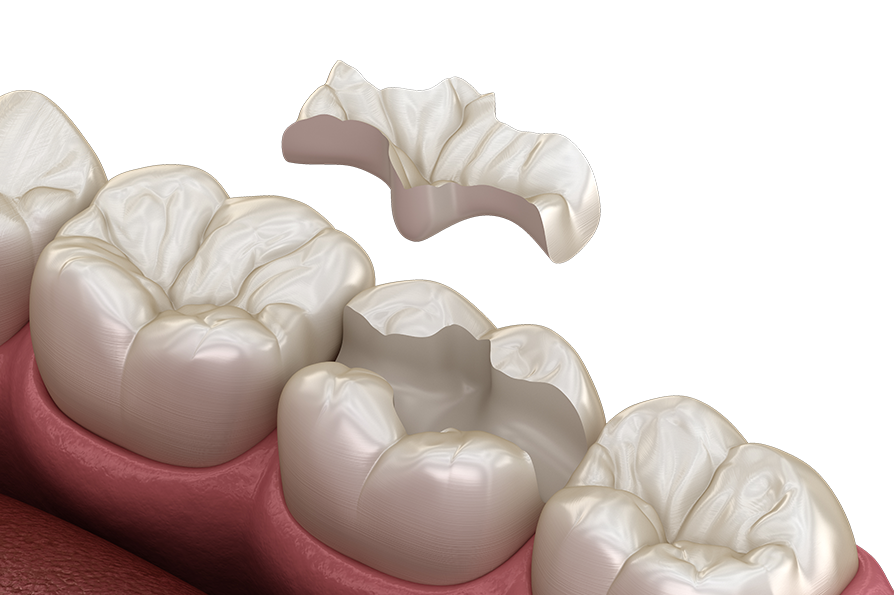
A ceramic restoration is a laboratory-crafted replica of a portion of tooth that is designed to replace missing or damaged natural tooth structure.

While composite fillings are highly reliable for restoring up to about 30% of the tooth's structure, ceramic restorations are generally recommended for larger restorations exceeding this size.

Types of Ceramic Restorations
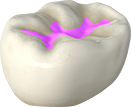
Fits within the
cusps of a tooth
Inlays
Inlays
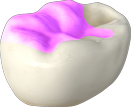
Covers one or more
cusps of a tooth
Onlay
Onlay
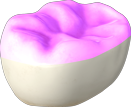
Covers the entire biting surface of the a tooth
Overlays
Overlays
Covers the entire visible portion of the tooth above the gumline
Crowns
Crowns
The Process of a Ceramic Restoration

We believe that informed patients make the best decisions about their care. Explore what is involved in a ceramic restoration at Royal Crown Dental below:

Appointment One: Tooth Preparation
Tooth Preparation
1
Your Comfort is Ensured
Oral Examination
You will be provided with noise-cancelling headphones
Oral Examination
You can choose from entertainment to watch during your procedure
Oral Examination
A blanket can be provided for you upon request
Oral Examination
Anaesthetic may be administered to reduce intraoperative sensitivity
2
The Tooth is Prepared
Tooth is Prepared
The tooth is prepared to retain as much natural tooth structure as possible
Tooth is Prepared
Any diseased tooth structure is removed
Tooth is Prepared
All salvageable tooth structure is retained
3
A 3D Scan is Taken of the Tooth Preparation
3D Scan
The tooth preparation is scanned and this scan is sent to the lab for the fabrication of the ceramic restoration
4
A Temporary Restoration is Placed
Temporary Restoration
A temporary restoration is placed to restore form and function to the tooth until the permanent ceramic restoration is cemented
Appointment Two: Restoration Cementation
Restoration Cementation
1
Your comfort is Ensured
Restoration Cementation
You will be provided with noise-cancelling headphones
Restoration Cementation
You can choose from entertainment to watch during your procedure
Restoration Cementation
A blanket can be provided for you upon request
Restoration Cementation
Anaesthetic may be administered to reduce intraoperative sensitivity
2
The Permanent Ceramic Restoration is Cemented
Ceramic Restoration
The temporary restoration is removed
Ceramic Restoration
The gold-standard cementing materials and processes are utilised to secure the ceramic restoration
3
An X-ray is Taken to Check the Cementation
Cementation
An X-ray is performed to check that no cement is outside the restoration margins
4
The Ceramic Restoration is Adjusted to Your Bite
Cementation
The functionality of the restoration within your bite is checked
Cementation
The restoration is adjusted accordingly, while retaining the biologically correct anatomy
The Royal Crown Difference

We believe that ceramic, bonded restorations are far superior in the vast majority of cases compared to the zirconia, mechanically retained crowns of the past.

VS
Bonded Ceramic Restoration

Ceramic bonded restoration are integrated with the tooth through advanced bonding techniques
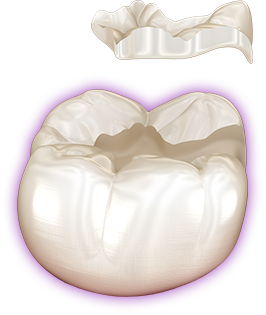
Bonded Ceramic
  • Less natural tooth is removed as over-preparation isn't required for cemented restorations.
  • Advanced cementing techniques create a better bond, improving stability and reducing decay risk.
  • Ceramic is more biocompatible and less destructive to the underlying and opposing tooth structures.
VS
Mechanical Zirconia Crown

Mechanical crowns sit on the tooth rather than integrating with it.
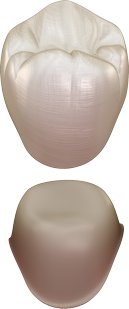
Mechanical Zirconia
  • More natural tooth is removed to achieve mechanical retention for the crown.
  • Poor sealing makes the crown less stable and increases the risk of decay.
  • Zirconia's hardness can damage opposing teeth and doesn't absorb biting forces well.
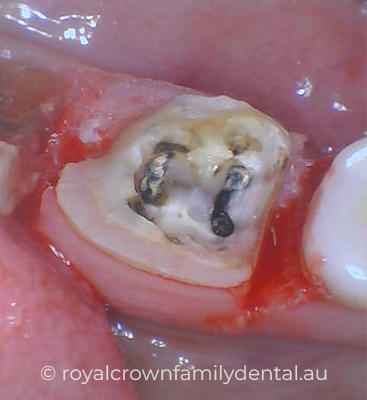
Restoring the Unrestorable
Before
Before
After
After

*Outcome shown is only relevant for this patient and do not necessarily reflect results other patients may experience.

With advanced techniques such as deep margin elevation, we are able to rebuild severely damaged teeth and place ceramic, bonded restorations.

Without these modern techniques, such restorations are impossible, often leading to tooth extraction as the only option.

Do You Need a Ceramic Restoration?

If a large part of your tooth is missing, or if you have extensive decay, this may be a sign you need a ceramic restoration.

If you have had Root Canal Therapy, but have yet to put a restoration on the treated tooth, a ceramic restoration would also be highly recommended for you.

However, the most reliable way to determine this is through a professional oral examination.

Our dentists use specialised dental loupes that magnify up to seven times more than the human eye, allowing for a much more precise assessment. In addition, dental x-rays can identify the extent of the restoration needed which may not be clear during a regular visual exam.


Ceramic Restoration
Ceramic Restoration
Ceramic Restoration

If you suspect you may need a ceramic restoration, or haven't had an oral assessment done in 6-months

Book an appointment

Your First Appointment At Royal Crown Family Dental
  • Oral Examination
  • Bitewing X-rays
  • Full Mouth X-ray
  • Wisdom Teeth Evaluation
  • Scale and Clean
  • Standard Treatment Plan
ALL FOR $365
Royal Crown Family Dental

Contact Us

Emergency Appointments Available
Contact Us